The 120-Day Clock
The Journey of Finding My Own Resilience | Chapter 2

If you missed Part I, start there. This is the story of what came after: the immigration countdown, the saplings I planted not knowing if I would see them grow, three rejections in one afternoon, and the morning I woke up with a physical ache in my chest and wondered if I was still cut out for any of this.
120 Days
I am on an H-1B visa. For anyone unfamiliar with what that means in a layoff: the moment your employer-sponsored job disappears, a clock starts ticking. In my case, two windows combined to give me my total runway:
60 days of continuation pay from Microsoft, during which the H-1B remained valid.
60 days of standard H-1B grace period after employment ends.
120 days total. That was it. That was everything.
And the clock was not the only thing narrowing the field.
Around two-thirds of the reach outs I made in those early weeks came back as immediate rejections, not because of my experience or my background, but because of my visa status. H-1B sponsorship is a filter many companies will not pass through. I would reach out, a conversation would begin, and then: "Unfortunately we are not able to support visa sponsorship at this time." Over and over.
The clock was running. And two of every three doors were locked before I could knock.
The day after the announcement, I put a post-it on the wall above my home desk. I wrote the number 120 on it. Every single morning after that, I crossed out the previous number and wrote the new one. That post-it became the most honest object in my life. You can still numbers scratched out with force, new ones written underneath with something between determination and fear.
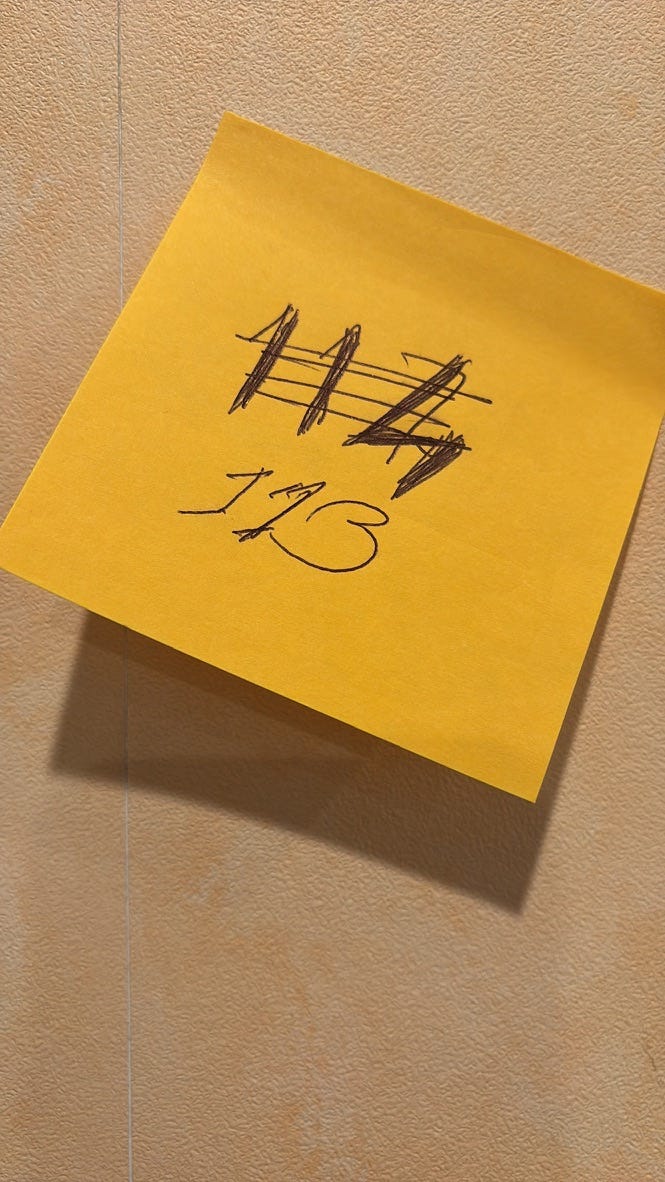
My goal was not to use all 120 days. My goal was to land a job before day 60. Because here is something people outside this system do not always understand: a visa transfer does not begin the moment you start applying. It begins the moment a new employer makes you an offer and agrees to sponsor your visa. Until that moment, everything is in legal suspension. You are not transferred. You are not protected. You are waiting.
I had watched this play out for someone I knew. He had received an offer. He was waiting for the transfer to process. Then a government shutdown hit. The paperwork stalled. His company rescinded the offer. He had to leave the country with his family.
That story lived inside me every day of those 120.
The Saplings
It was May. New England spring was doing what it always does: erupting. Light green everywhere. Trees bursting. Flowers pushing through. The whole world outside my window was insisting on new life.
Earlier that week, I had bought saplings to plant in the garden. We always start planting in May in New England. Anything earlier risks a late frost that kills everything overnight. Those plants were meant to be harvested two to three months later, right around August.
One afternoon that first week, I sat on my deck at lunchtime. I was not hungry. I had a glass of water and some snack. I looked at those saplings, small and fresh and full of potential, and I thought: I might not be here to see them grow.
If I could not find a job in time, we would be selling everything. The furniture. The belongings. The life we had carefully assembled around us in this city. We would be leaving for a country my son had not called home in years, pulling him out of the school and friendships that made up his entire world. My wife would be leaving the career she had built here.
All of it, gone. Because of a sixty-day clock.
The garden was beautiful that spring. I sat with that beauty and let it break my heart a little, because grief and hope can live in the same moment if you let them.
The Routine That Saved Me
I made a decision in that first week: I would treat the job search like a job. Same hours. Same discipline. Same accountability.
I was at my home office by 9 every morning. Two hours on job boards, applications, recruiter outreach. Midday: research on target companies, online courses, interview prep. Afternoons: refining my resume based on feedback, practicing answers, reading about the companies I was targeting. I used AI as a constant companion on walks and commutes, talking through scenarios out loud, asking myself hard questions, rehearsing how to reason clearly under pressure.
In the evenings, my wife and son and I took walks together. Every evening, without fail. It was the thing that kept me from disappearing into the anxiety. Family was the anchor when everything else was drifting.

I also built accountability into the search itself. A small cohort of friends and former colleagues in similar situations, people who understood exactly what was at stake. We ran daily standups. We did mock interviews and debriefs. We exchanged frameworks for how to answer different types of questions. We shared what was working and what was not. I do not think I would have made it without them.
And every morning, I changed the number on the post-it.
Part of that structure became something I had not planned. I started running Friday office hours. An open hour, every week, for anyone else who had been laid off and was navigating the same territory. What I was figuring out in real time, how to approach an interview after nineteen years, how to read a company’s signals, how to pace yourself without losing yourself. I shared with whoever showed up. Some weeks three people, some weeks one, some weeks more.
But showing up for them made me show up for myself. Giving back what I was getting from others kept me anchored. It reminded me that I still had something to offer, even in the weeks when I was not sure I did.
The Day of Three Rejections
The rejections came throughout the search, as they always do. You learn to process them. You get better at separating the pain of rejection from the meaning of it.
But then came one particular afternoon.
Three rejections arrived in sequence: Microsoft AI, Wayfair, and Apple. By late afternoon, all three had landed in my inbox.
The Microsoft AI and Wayfair interviews had gone well. I had left both conversations feeling genuinely hopeful. I had told my wife about them with real confidence, something I had been careful not to do too often, because confidence can curdle into expectation and expectation into crash. But I had let myself feel good about those two. And both came back no.
I did not go for our evening walk that night. I was too heavy. I sat on the couch and could not move much. My wife came and sat beside me. That quiet, deliberate gesture meant more than any words could have. She told me she believed in me. That we would scale through this together. That something would work out.
My son, from across the room, said he had zero doubt I would land something. It was just a matter of time, he said. He said it with the absolute certainty of someone who has never once considered the alternative, and in that moment, his certainty was medicine.
The Worst Morning
That night I could not sleep. I turned the rejections over and over. What had I said wrong? What had I missed? Was I reading the interviews incorrectly, or was there something genuinely broken in how I was presenting myself?
The next morning I woke with a heaviness in my chest that felt almost physical. A real ache, like something pressing from the inside. I had not experienced that before. I sat at my desk and stared at the wall for a while.
The thought that scared me most was not: will I find a job in time? It was: am I still competitive enough for this? Am I cut out for the big leagues anymore?
Nineteen years without an external interview. Eleven at Microsoft. Eight at Nokia before that, where I had been acquired rather than hired from outside. I had built things, filed patents, shipped products used by hundreds of thousands of people. But had I been inside the walls too long? Had I calcified without noticing?
I reached out to the hiring manager at Microsoft AI and asked for feedback. Most companies do not provide it. This one did. The response was mixed: two interviewers had been positive about me, two had not. There were specific areas flagged. It stung. It also clarified. I made notes to prepare better.
I have come to believe something firmly about rejection in hiring: it is almost never a verdict on a person’s worth or capabilities. It is mostly about fit, timing, and the specific chemistry of a moment. That belief did not make the worst morning easier. But it made it survivable.
The Guest WiFi
Months after the layoff, I was speaking at a conference held at the Microsoft office in New York City. I walked into a familiar building, arriving this time as a guest, a speaker, someone brought in from the outside to add value.
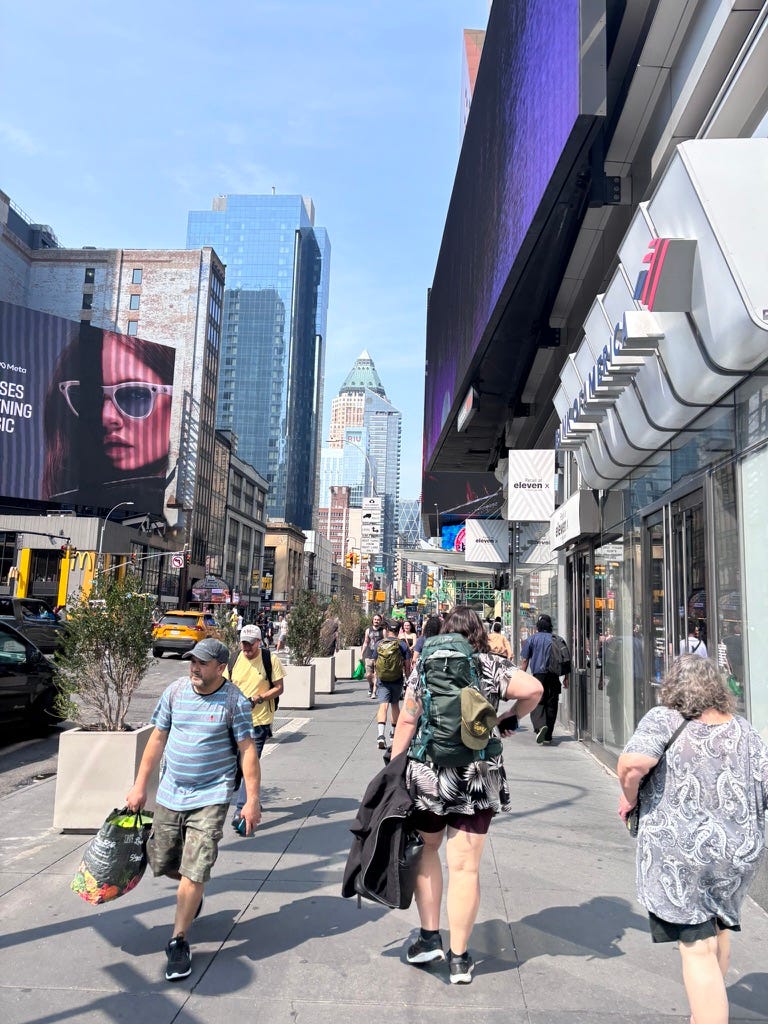
When I arrived, my phone reached automatically for the office WiFi network, the way it had done for years. Muscle memory. The phone had connected to Microsoft’s network in buildings across the country and around the world. It knew the routine.
Nothing connected. I had to sign in manually as a visitor. MSFTGUEST.
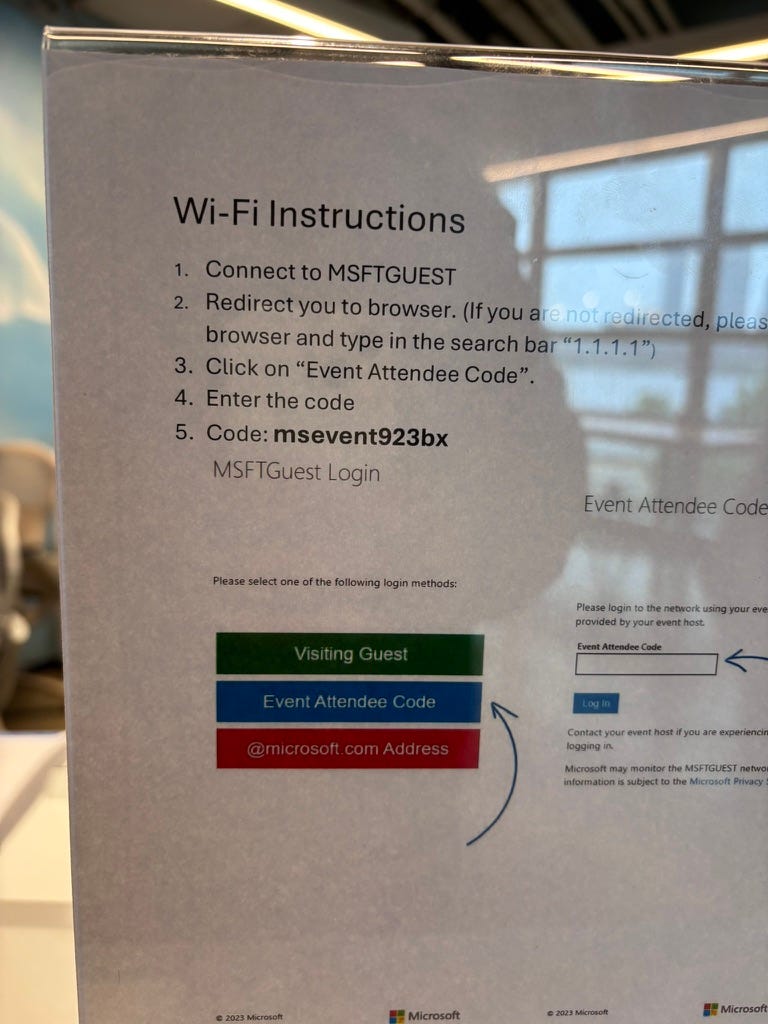
A small thing. The most mundane possible moment. But those small things have a way of landing hard when you are not expecting them. That login screen told me, quietly and without ceremony, that the relationship was over. The network had moved on. And I had to as well.
The Turn
The turning point came quietly, the way turning points often do. An Amazon recruiter reached out. The pipeline started to slowly build again. There were conversations, then more conversations, then real momentum.
Something shifted inside me. The dread did not disappear. The countdown was still running. But I was back in fight mode.
I changed the number on the post-it. Then I changed it again.
Next: Chapter III, The Rebound. Nineteen years without an external interview, and what it took to become match-ready in weeks.